
While this downwards shift is evident across most major Canadian cities, Calgary presents a more balanced story— although rents are softening, underlying demand remains relatively stable.
WHAT'S HAPPENING TO RENTAL RATES?
Across Canada, rent growth is no longer accelerating at the pace seen between 2022 and 2024, particularly in major cities. Recent data from CMHC show that rents for new tenants are beginning to stabilize:
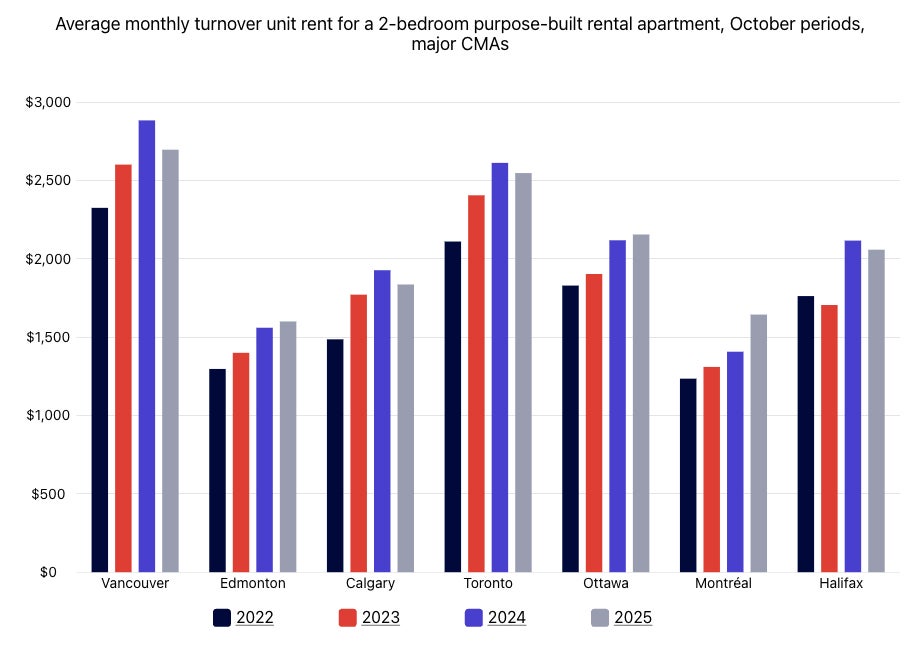
At the provincial level, apartment rents declined in major regions, including British Columbia (4.8%), Alberta (4.6%), and Ontario (4.4%), while Quebec experienced a more modest decrease (2.1%). In contrast, smaller provinces such as Nova Scotia (+3.9%), Saskatchewan (+3.7%), and Manitoba (+3.4%) continued to see rent growth, with Saskatchewan leading longer-term increases.
Looking at major cities, rents have softened across all six of Canada’s largest urban centres. Calgary recorded the most significant decline (-5.0%), while Montreal saw only a slight decrease (-1.6%). Toronto rents have dropped to their lowest level in nearly four years, and while Vancouver has seen some recent monthly increases, rental rates remain below early 2022 levels.
Additionally, rents for shared accommodations have declined year over year, falling below $900 for the first time in three years.
WHY ARE RENTS ADJUSTING?
The short answer is: changes to supply, demand and competition.
1. Increase in Rental Supply
Over the past two years, a significant number of new rental units have been completed across major Canadian cities, including Calgary. This includes both rental apartments and secondary suites entering the market.
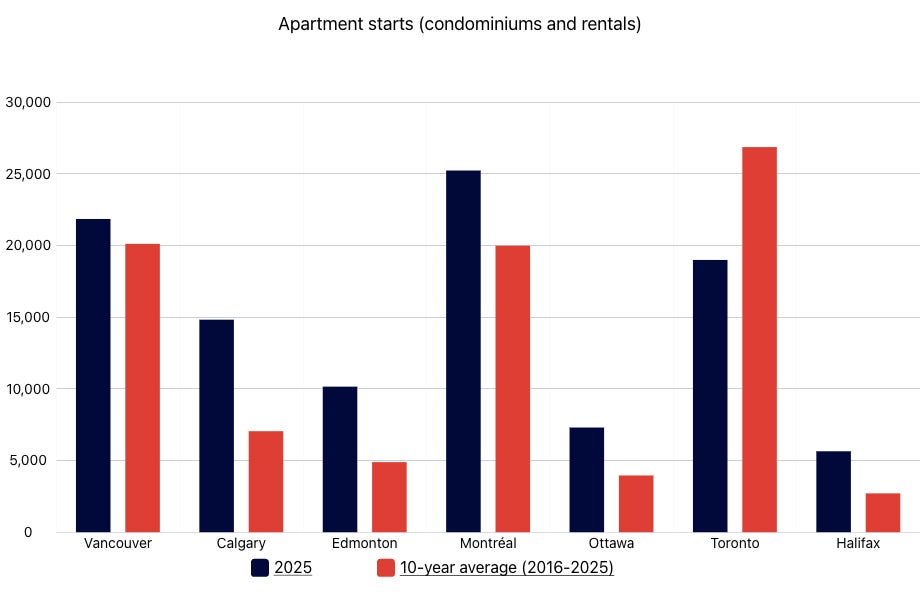
As a result, tenants now have more options available at any given time. This increased supply reduces urgency among renters, creates direct competition between landlords and places downwards pressure on rental rates.
2. Rising Vacancy Rates
At the same time, vacancy rates have increased across most markets, reinforcing the impact of higher supply.
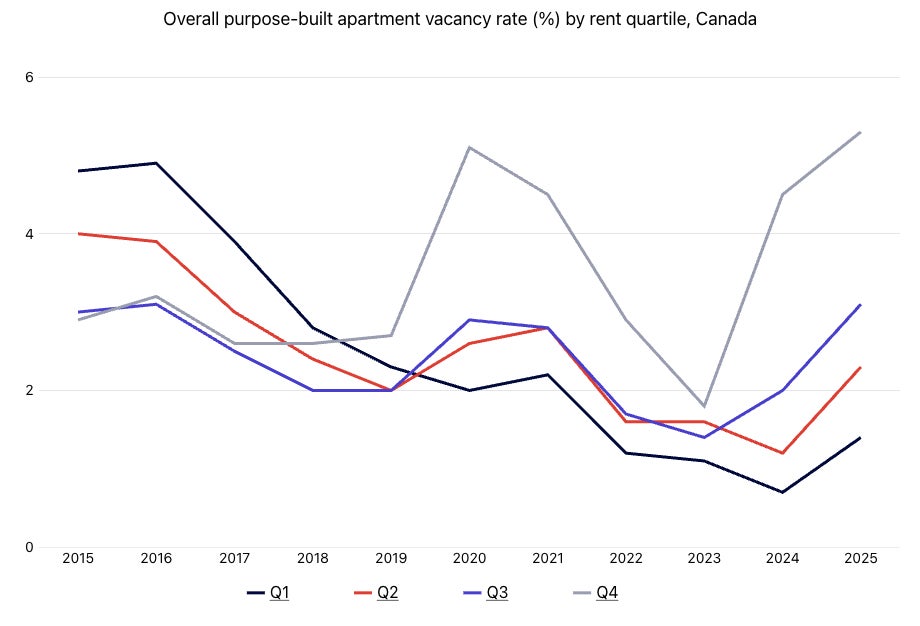
This shift represents a move away from the extremely tight rental conditions seen in recent years. As vacancies rise, landlords have less pricing power, leading to slower rent growth and declines in higher-priced or newly completed units.
WHAT DOES THIS MEAN FOR CALGARY?
The key takeaway is: Calgary has transitioned into a more balanced rental market.
- Rent rates have adjusted from their peaks in 2023 and 2024, but not as sharply as in some other major cities.
- Increased supply is placing downwards pressure on rental rates.
- Rental rate adjustments are heavily dependent on location and product type. Some rental categories are stronger than others.
For investors and developers, this signals a shift toward more moderate rent growth and a need for more competitive leasing strategies.
Source: